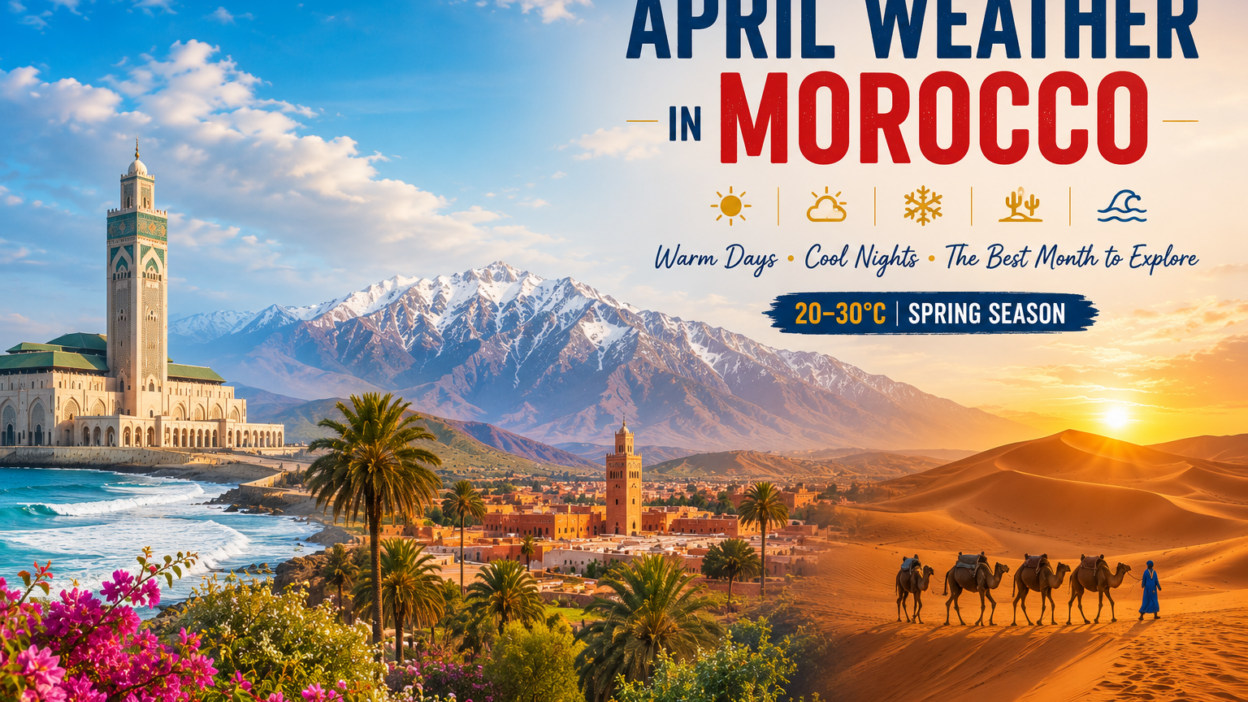
April Weather in Morocco offers some of the country’s most comfortable travel conditions, but the weather varies far more than many visitors expect. While April marks the peak of spring, Morocco’s diverse geography creates distinct climate zones, from the cool Atlantic coast and fertile northern plains to the snow-capped High Atlas Mountains and the warming Sahara Desert. On the same day, afternoon temperatures in Merzouga can be more than 10°C (18°F) higher than in coastal cities such as Essaouira.
Rather than relying on generic descriptions like “warm and sunny,” this guide analyzes official Moroccan climate data, long-term meteorological normals, and regional weather records to explain what April weather is actually like across the country. Using data and weather statistics from the Direction Générale de la Météorologie (DGM) and multi-decade climate observations, you’ll find accurate temperature, rainfall, and sunshine averages for Morocco’s major destinations, helping you choose the best places to visit and prepare for regional weather differences with confidence.
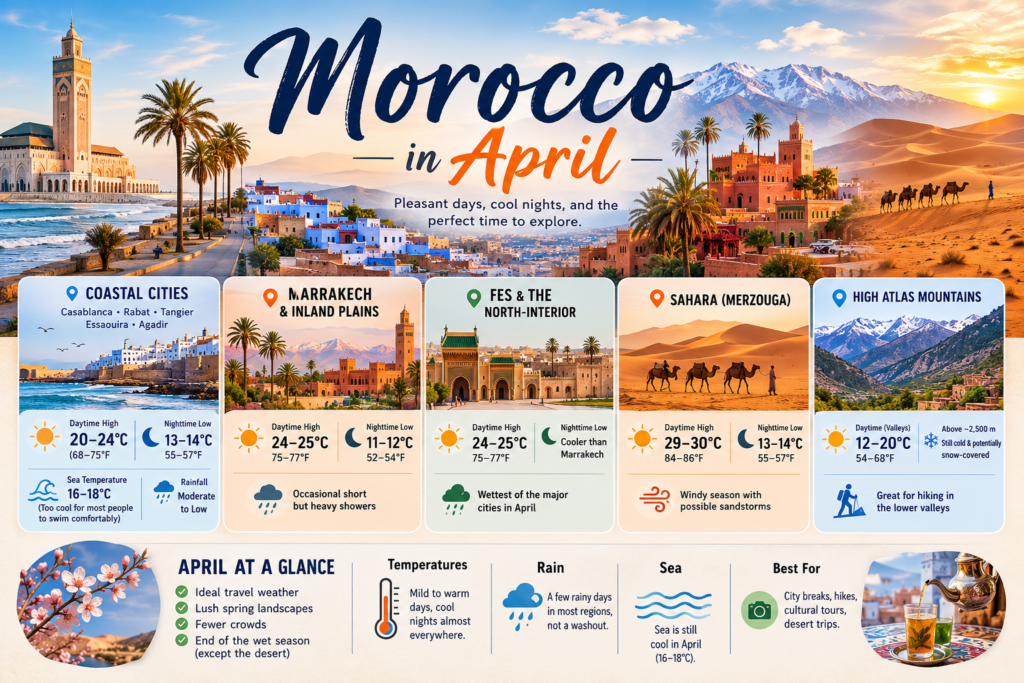
The April weather in Morocco varies widely by region. Coastal cities such as Casablanca, Rabat, Tangier, Essaouira, and Agadir stay mild, with highs of 20–24°C (68–75°F), cool nights, limited rain, and sea temperatures of 16–18°C (61–64°F). Marrakech and inland plains are warmer, reaching 24–25°C (75–77°F), while Fes remains cooler at night and wetter. The Sahara near Merzouga can approach 30°C (86°F), with colder nights and occasional strong winds. In the High Atlas, valleys remain cool (12–20°C/54–68°F), while higher elevations may still have snow. Overall, April brings mostly mild spring conditions, with occasional rain outside the desert.
Morocco’s weather in April is shaped by three geographic forces working at once: the cooling influence of the Atlantic on the western coast, the warming effect of distance from the ocean as you move inland, and elevation, which chills the Atlas Mountains regardless of season. April is the point in the year when all three of these are in relatively gentle balance — which is exactly why it’s considered one of the two or three best months to visit the country as a whole.
Coastal Morocco (Casablanca, Rabat, Tangier, Essaouira, Agadir) stays cooler and breezier in April because the Atlantic hasn’t warmed up yet; sea temperatures are still around 16–18°C, too cold for a comfortable swim for most travelers, even though air temperatures feel pleasant.
Inland Morocco (Marrakech, Fes, Meknes) warms up faster once you’re away from the coast, so daytime highs climb several degrees above what the coast experiences, while clear night skies mean temperatures still drop noticeably after dark.
The Sahara (Merzouga, Zagora, M’Hamid) is already firmly into its warm season by April, with daytime highs in the high 20s°C and a well-documented risk of the Sirocco wind kicking up dust and sandstorms.
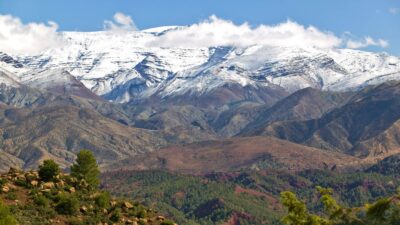
The High Atlas Mountains run on their own clock entirely: elevation drops temperature by roughly 6–7°C for every 1,000 meters gained, so a warm spring day in Marrakech tells you very little about conditions at 2,500–4,000 meters, where snow can still linger on north-facing slopes and around Mount Toubkal’s summit into April and even May.
City-by-City Weather Breakdown
Marrakech in April
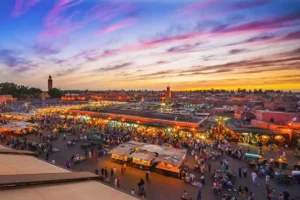
Marrakech is at its most comfortable in April: daytime highs average around 24–25°C (75–77°F), with cool nights near 11–12°C (52–54°F). Rainfall averages roughly 39–46 mm spread across 6–8 days, usually arriving as short, sometimes heavy downpours rather than all-day drizzle. Humidity is moderate (around 55–60%), and there are roughly 8 hours of sunshine a day. For visitors, this translates to warm, dry days ideal for walking the medina, and evenings cool enough to need a light jacket.
Casablanca in April
As Morocco’s Atlantic business hub, Casablanca runs a few degrees cooler than Marrakech. Expect highs around 20–22°C (68–72°F) and lows near 13–14°C (55–57°F), with roughly 35–40 mm of rain over 6–8 days. The sea sits around 17–18°C — refreshing at best, cold for most swimmers.
Rabat in April
As part of the April Weather in Morocco, Rabat enjoys mild spring temperatures similar to nearby Casablanca. Expect daytime highs of 20–21°C (68–70°F) and cooler nights between 10–14°C (50–57°F). The capital typically receives around 40 mm (1.6 in) of rain over 6–8 days, along with 8–9 hours of sunshine each day. Sea temperatures average 17°C (63°F), making Rabat’s Atlantic beaches better suited for seaside walks and surfing than swimming. Want to know what to do in Rabat Morocco, Here is a complete guide: The Best Things to Do in Rabat
Fes in April
Set further inland and ringed by hills, Fes sees daytime highs similar to Marrakech (around 22°C/72°F) but noticeably colder nights, often dropping to 8–11°C (46–52°F). It’s also the wettest of the major cities in this comparison, with roughly 60–67 mm of rain over 7–9 days — pack a light rain layer if you’re exploring the medina’s narrow, shaded alleys.
Agadir in April
Morocco’s southern beach resort stays warm and dry: highs around 24°C (75°F), lows near 13–14°C (55–57°F), and comparatively low rainfall of roughly 13–18 mm over just 2–4 days. Sunshine runs close to 9 hours a day. The Atlantic here is a touch milder than further north, at around 18°C, but still cool for casual swimming.
Tangier in April
Morocco’s northern gateway city sees highs around 20–21°C (68–70°F) and lows of 11–14°C (52–57°F), with around 60–62 mm of rain over 8–9 days — similar to Fes in total rainfall, but spread over a slightly milder temperature range thanks to its position on the Strait of Gibraltar. Sea temperature hovers near 16°C.
Chefchaouen in April
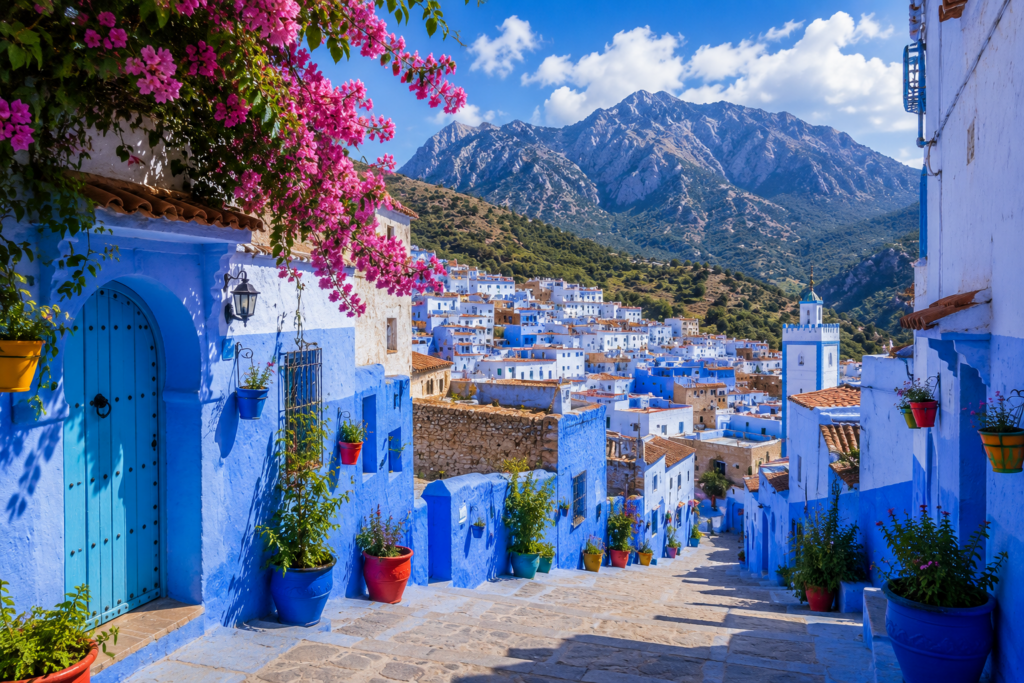
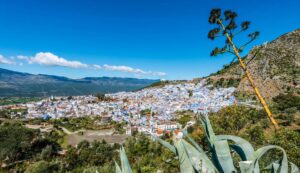
The blue-washed mountain town in the Rif is cooler than the lowland cities, reflecting the regional variation in April weather in Morocco. Highs reach around 19–20°C (66–68°F), with lows commonly dropping to 7–10°C (45–50°F) due to its elevation of roughly 600 meters. Sunshine averages 7–8 hours a day, with a reasonable chance of a passing shower.
Essaouira in April
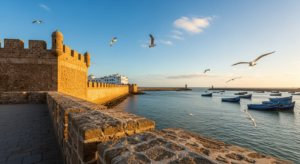
This Atlantic port city is defined by wind as much as temperature. April highs run about 18–22°C (64–72°F) with lows near 13–14°C (55–57°F), and rainfall is comparatively low (roughly 30–35 mm). What sets Essaouira apart is wind speed — averaging around 26 kph in April, among the windiest months of the year here — which is exactly why the town is a hub for kite- and windsurfing. The sea stays a cool 17–18°C.
Merzouga (Sahara) in April
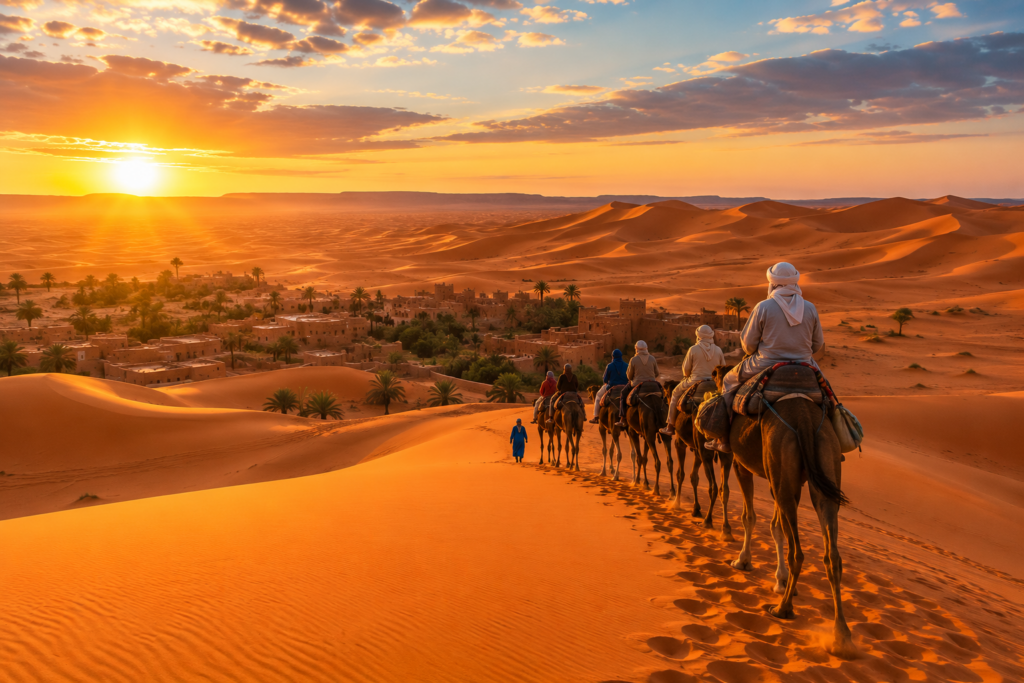
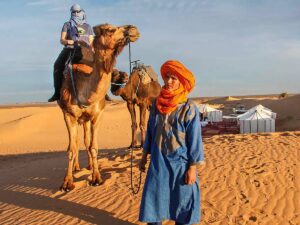
April Weather in Morocco feels very different in the Sahara than elsewhere in the country. In Merzouga, daytime temperatures typically reach 29–30°C (84–86°F), while nights cool to 13–14°C (55–57°F), creating a daily temperature swing of 15°C (27°F) or more. April is also one of the windier months in the desert, with the Sirocco occasionally bringing dust and sandstorms. If you’re visiting, pack sun protection along with a scarf, sunglasses, and sealed bags to protect electronics from blowing sand. Here is the The Ultimate Merzouga Desert Experience with Camel Trekking in Morocco.
Atlas Mountains in April
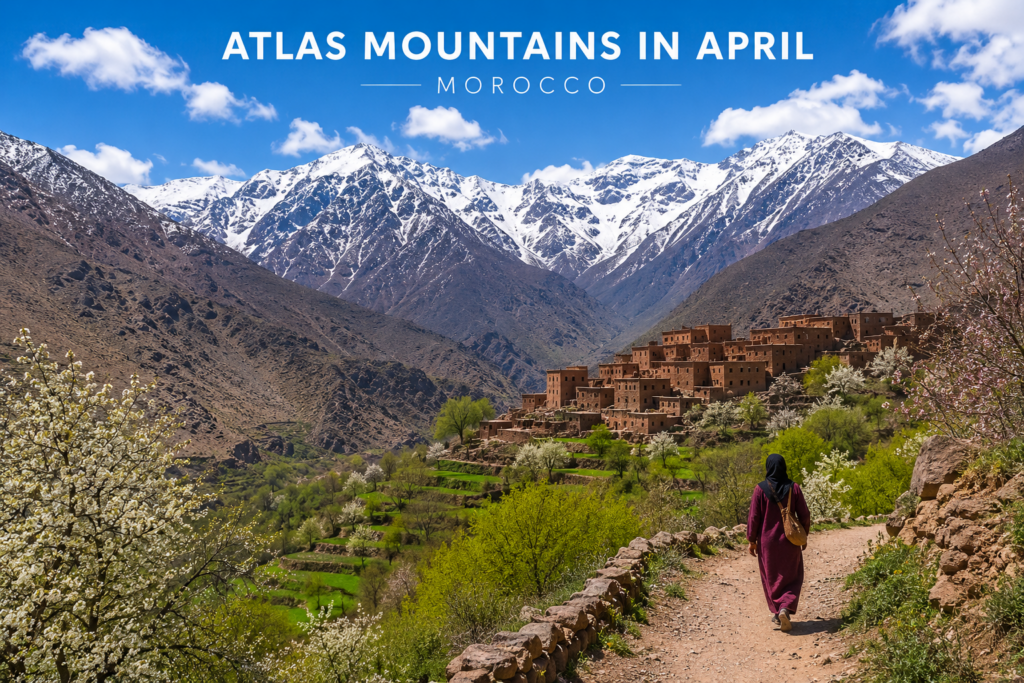
Conditions vary enormously with altitude. In lower valleys like Imlil (around 1,700 m), daytime temperatures typically run 12–20°C (54–68°F) with nights closer to 5°C (41°F). Higher up — above roughly 2,500 meters, including much of the approach to Mount Toubkal’s 4,167 m summit — snow and ice are still common in April, and crampons or an experienced guide are often recommended for the final stretch.
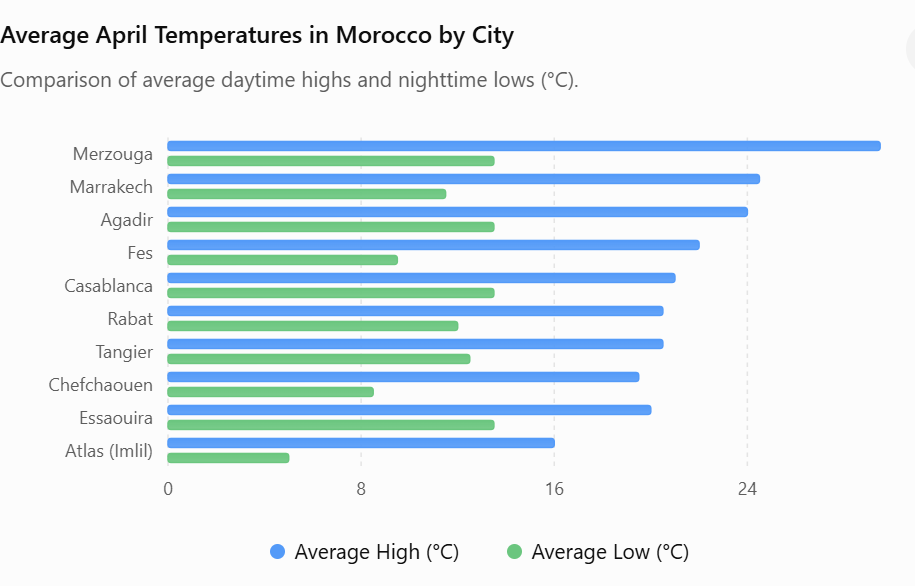
Average Temperatures by City
The graph below compares the Morocco temperature in April across the country’s most popular destinations, showing average daytime highs and nighttime lows. It highlights the regional climate differences, from the cool Atlas Mountains to the warm Sahara Desert.
Rainfall Comparision in April Weather
City
Avg. April Rainfall
Avg. Rainy Days
Marrakech
39–46 mm
6–8
Casablanca
35–40 mm
6–8
Rabat
~40 mm
6–8
Fes
60–67 mm
7–9
Agadir
13–18 mm
2–4
Tangier
60–62 mm
8–9
Essaouira
30–35 mm
Low, infrequent
Merzouga
Minimal (desert climate)
Rare
How April Weather in Morocco Compares to March, April and May
Metric (Marrakech, representative of the general trend)
March
April
May
Avg. high
~23°C (73°F)
~24–25°C (75–77°F)
~28°C (83°F)
Avg. low
~10°C (50°F)
~11–12°C (52–54°F)
~14°C (57°F)
Rainfall
~40–50 mm
~39–46 mm
~25 mm
General feel
Still cool at night, occasional late-winter fronts
Warm days, cool nights, driest transition point
Warmer, drier, early hints of summer heat
The pattern holds across most of the country: March can still carry a cool, unsettled edge, April is the sweet spot of warm-but-not-hot days with rain tapering off, and May pushes temperatures — especially inland and in the desert — noticeably higher while rainfall drops further.
Coast vs. Inland vs. Mountains vs. Desert
The April weather in Morocco varies significantly by region, with temperatures, rainfall, and day–night differences shaped by geography. Coastal cities, inland areas, mountains, and desert regions can experience very different conditions during the same month.
Coast vs. inland: Coastal cities run 3–5°C cooler by day than Marrakech or Fes, thanks to the moderating Atlantic; nights are often slightly milder on the coast for the same reason.
North vs. south: Tangier and Chefchaouen in the north see more rain days than Agadir in the south, which is markedly drier even in April.
Mountains vs. desert: The High Atlas and the Sahara sit at opposite extremes on the same day — a trekker could feel below 10°C at altitude near Toubkal while a desert-tour visitor in Merzouga, a few hours away by road, swelters at 30°C.
Day vs. night: The desert has by far the widest daily temperature swing (commonly 15°C or more), while coastal cities have the narrowest, often under 8°C, because the ocean moderates both extremes.
What to Pack
Item
Why
Light layers (t-shirts + long sleeves)
Daytime warmth varies by 5–10°C depending on region
A packable rain jacket or umbrella
Coastal and inland cities still get 6–9 rainy days in April
A warm layer / fleece for evenings
Nights drop 10°C+ below daytime highs almost everywhere
Sunglasses, sunscreen, a hat
UV levels are already high (several cities report UV index 8+)
A scarf or buff
Useful against desert wind and dust, especially in Merzouga
Sturdy walking shoes
For medina cobblestones and Atlas trails alike
Swimwear (manage expectations)
Sea temperatures of 16–18°C suit hardy swimmers, not casual dips
Swimming conditions: As part of the overall April weather in Morocco, sea temperatures remain relatively cool along the Atlantic coast. Across every Moroccan coastal city checked here, the Atlantic sits in the 16–18°C range in April — bearable for a quick dip for the cold-hardy, but most travelers will find pools (many riads and hotels heat theirs) more comfortable than the sea this early in spring.
Hiking conditions: April is one of the two or three best trekking months of the year in Morocco’s High Atlas foothills and valleys. The mild April weather in Morocco brings wildflowers, clear skies, and pleasant daytime temperatures ideal for walking. Above roughly 2,500 meters, however, this is still shoulder season for snow, and routes toward Toubkal’s summit should be treated with the same caution as late-winter conditions.
Festivals and Events in April
Beyond its pleasant temperatures, April Weather in Morocco provides ideal conditions for outdoor festivals and cultural events. One of the month’s highlights is the Marathon des Sables, a multi-stage ultramarathon of around 250 km (155 miles) through the Sahara Desert near Ouarzazate and Zagora, usually held during the first half of April. Essaouira also hosts a spring classical and chamber music festival later in the month, while Merzouga has, in some years, welcomed visitors to an international desert music festival. Because dates vary from year to year, it’s always worth checking the latest event calendar before planning your trip.
A final travel tip: the Islamic lunar calendar means Ramadan and Eid al-Fitr move approximately 10–11 days earlier each year. When Ramadan falls partly or entirely in April, restaurant opening hours, public transport schedules, and the daytime atmosphere in many cities may differ from usual. Before traveling, check the specific dates for your visit, as they can influence your experience just as much as the April Weather in Morocco.
Key Takeaways
April is one of Morocco’s most comfortable months overall: warm days, cool nights, and rainfall that’s tapering off almost everywhere except the desert (which is already dry).
Marrakech and Agadir offer the warmest, driest April conditions among the major cities; Fes and Tangier are the wettest.
In the Sahara Desert, April brings daytime temperatures of around 30°C (86°F), along with occasional strong winds and dust storms.
The High Atlas Mountains can still hold snow above 2,500 meters (8,200 ft), even as the valleys below enjoy mild temperatures and lush spring landscapes.
Along the Atlantic coast, sea temperatures of 16–18°C (61–64°F) make April ideal for beach walks, surfing, and other watersports rather than casual swimming.
When planning, consider April weather in Morocco, pack layers to handle temperature swings of 10°C (18°F) or more between daytime and nighttime across much of the country
Frequently Asked Questions
Is April a good time to visit Morocco? Yes — along with October and November, April is widely regarded as one of the most comfortable months, combining warm (not extreme) daytime temperatures with tapering rainfall.
What is the average temperature in Morocco in April? It depends heavily on region: roughly 20–22°C by day on the Atlantic coast, 24–25°C inland in Marrakech, and closer to 29–30°C in the Sahara, with nights typically 10–15°C cooler.
Does it rain a lot in Morocco in April? Most cities see moderate rainfall — typically 35–65 mm spread over 6–9 days — usually as short showers rather than sustained rain. The Sahara sees very little rain even in April.
Is Marrakech hot in April? Marrakech is warm rather than hot in April, with highs around 24–25°C and cool nights near 11–12°C — noticeably milder than the 36–38°C+ highs it sees in July and August.
Can you swim in the sea in Morocco in April? Technically yes, but sea temperatures of 16–18°C along the Atlantic coast are cold for casual swimmers; hardy swimmers or those in wetsuits (common among surfers) will manage more comfortably.
Is it warm enough for the desert in April? Daytime, yes — Merzouga regularly reaches the high 20s°C. Nights are cooler (around 13–14°C), and dust or sandstorm activity is somewhat more common in April than in the cooler winter months.
Is snow still an issue in the Atlas Mountains in April? At altitude, yes. While valley towns like Imlil are mild, snow and ice frequently persist above roughly 2,500 meters into April and sometimes May, particularly on north-facing slopes and near Toubkal’s summit.
Conclusion
April Weather in Morocco is among the best of the year, but conditions vary widely by region. Expect warm, dry days in Marrakech and Agadir, cooler Atlantic weather along the coast, wetter conditions in Fes, early desert heat in Merzouga, and lingering snow in the High Atlas. Using official climate data and packing for regional differences will help you make the most of your April trip.
Note: Where sources gave different figures for the same city and metric, this guide presents a range rather than a single number to reflect the variability of April weather in Morocco and avoid false precision. Figures should be treated as long-term climate averages, not forecasts for any specific year or trip.